Exciting news to report! The best yet! The National Gallery of Ireland has acquired three – yes three! – more of Una Watters’ paintings to add to the national collection. They will join Girl Going by Trinity in the Rain, which has been hanging in Room 15, and garnering lots of public interest, since it was donated in 2023.
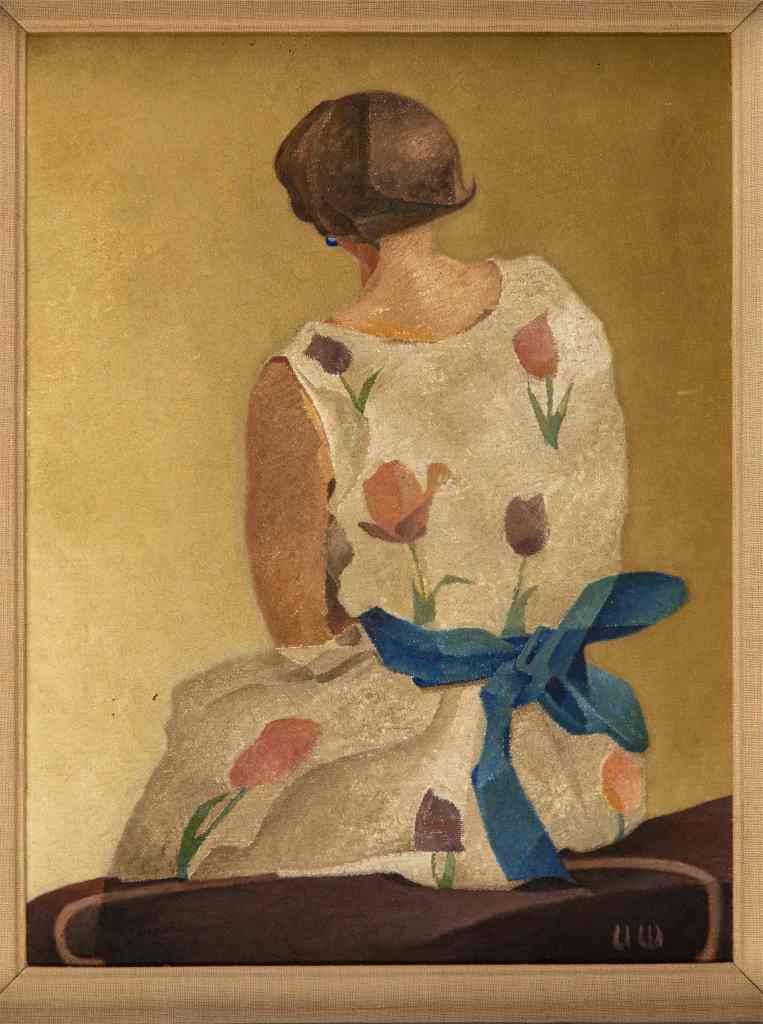
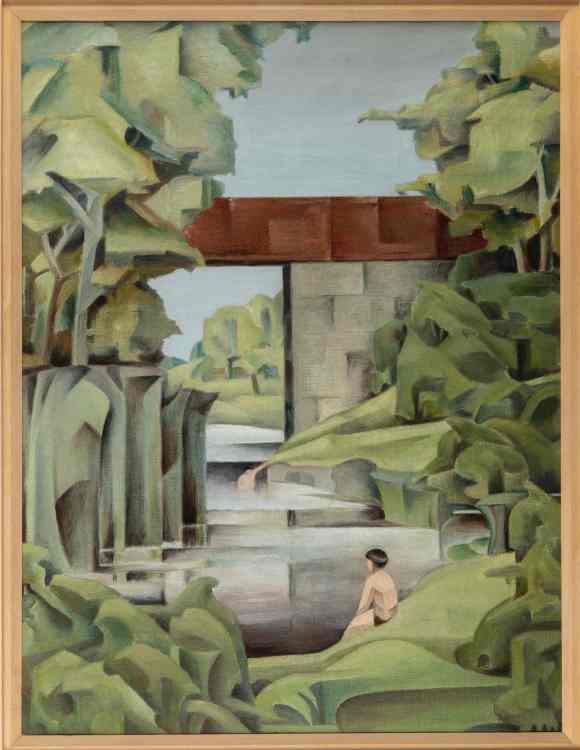
The works, which have been donated to the gallery, are all oils – Isabella (1956), Harvest (1965) and The Red Bridge (1956).
These are all premier works (well, that could be said of all Una’s work, really) showing her at the height of her painterly powers. They also demonstrate her versatility of form – portrait, narrative painting and landscape.
The donations once again highlight the generosity of the paintings’ owners – a generosity that was so often on offer when Sheila Smith, Una’s niece, and I first got together to organise “Into the Light”, the 2022 retrospective exhibition which started the ball rolling on this project.
Our campaign got going in earnest during Covid as we trawled the country – albeit remotely – trying to trace Una’s work. We ran appeals through the Irish Times, as well as RTE television and radio in our quest to find her lost paintings and to alert the public to a painter whose reputation had been totally eclipsed. In truth, we saw no further than that. We never dreamed that one day four of Una’s works would be part of the national collection
But due to the largesse of the owners of Una’s paintings, who not only gave us work but often drove to the United Arts Club in Dublin to deliver the paintings in person, that show helped to put Una on the artistic map.
It was their faith in Sheila and me – two amateurs in the art world – and their dedicated enthusiasm for Una’s work that made the 2022 show possible. And it’s exactly the same spirit that has now elevated Una Watters to what we’ve always considered her rightful place – a nationally recognised painter of note. To them, to the United Arts Club and in particular, Brid Tunney who facilitated the 2022 show, and to all the supporters and followers of this website, a big thank you.
There are plans to show the new works some time in 2027. In that regard, I no longer have to say watch this space. Watch the National Gallery instead!
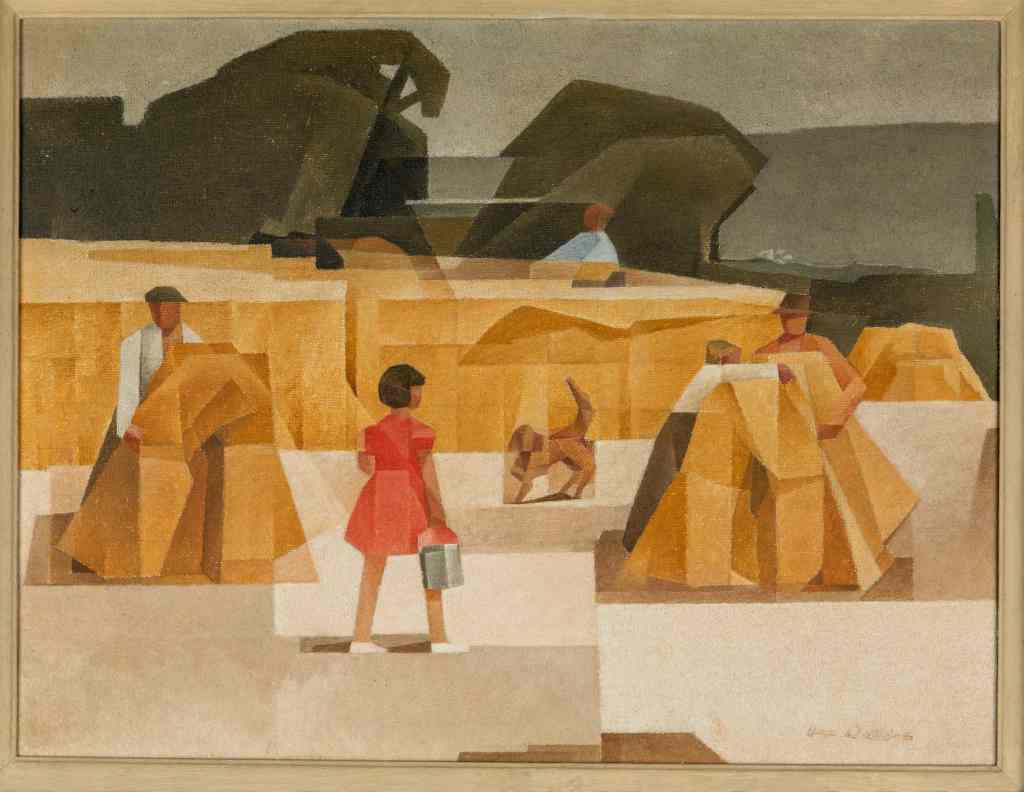
“Harvest” has a valedictory air because it was painted very near the end of Una’s life. But could this work also have been the key to a new artistic direction?
Harvest (oil on canvas, 70.5cm x 57 cm) was, according to family sources, Una’s last painting before her death on November 21, 1965, although Eugene Watters’ biographer Máirín Nic Eoin gives that honour to Thar an GPO, discussed in our last post. Either way, both Thar an GPO and Harvest were completed very shortly before her death and can be seen as companion pieces.
While Thar an GPO is a public work, capturing the transcendent light of the new Republic at the origin location of the national story, Harvest is intensely private. Its territory is the past, the idyllic days of childhood when the land around the McDonnell family home was being farmed – see also The Farm (1964). But there are similarities in composition. Both feature child figures through which the action of the painting is narrated, and it’s likely that both represent Una as a young girl.
In Harvest, “Una” holds almost centre stage in a painting that is divided into three planes – a technique seen in also in Wild Apples (see blog June 24). The foreground inhabits a luminescent realm, the pearly light set out in almost architectural blocks. Una is standing in the brightest quadrant, a perky child in a rose pink dress bearing a tea caddy to the workers bringing in the harvest. Nearby is an agile brown dog, tail up, gambolling around all the activity.
In Una’s plane of the painting three men are stacking bales of hay. The man to the right with the hat (and jacket?) may possibly be Una’s father – again that theatrical use of prop. The hat speaks of authority and seniority, while of the other two workers, both are in their shirtsleeves, one is hatless and the other sports a soft cloth cap. The stooks of harvested hay look solid and sculptural but they also manage to suggest mobility. Despite their geometrical aspect ( like the trees in the background) the bales look animated and the men look as if they’re trying to tame them rather than stack them.
The mid-ground is taken up with a wide band of uncut field, like a golden wall bisecting the work.
The background portrays a different mood altogether. Unlike the foreground which is drenched in light, the sky is greyly overcast and the hills are pewter-coloured. There is no sign of the sun that bathes the rest of the painting. The threshing machine, rendered in black, seems to meld with the very sharply angular trees and the silhouettes of farm buildings to lend a brooding presence to the top of the canvas, as if a very black mood is descending. The machine dominates, a large prehensile beast, driven relentlessly on by a man intent on his work. The grim reaper associations are inescapable.
It’s tempting, perhaps, to read too much significance into such painterly tropes, when we know as viewers that Una’s death is close, but there is a symphony of mood in this work, a range of competing emotions – nostalgia, melancholy, presentiment – that suggest existential concerns. Gone the one-note cheery realism of The Ladies Committee, or the witty outward-looking social observation of Cappagh Road.
Although the work is listed in the posthumous 1966 exhibition catalogue as Harvest, it’s referred to colloquially among Una’s family as Tea in the Fields – a much more Una-like title. We’ve remarked before how straightforward her titles were – Girl Walking by Trinity in the Rain, The Ladies Committee, The People’s Gardens – so it is possible that Eugene may have titled it for the 1966 exhibition. (On the other hand, the work may have had two titles – one as a work-in-progress, another when the painting was finished.)
But the titling issue recurs in relation to The Emerald Ballroom Watercolours (see dedicated page on this site) which were executed in the weeks prior to her death. It’s a moot point if Una would have titled these works at all since they appear to be studies towards a bigger idea.
However, when Eugene was donating them to the Ballinasloe Bridge Club, he added titles to the 25-strong collection – e.g. Dawnscape in Grey Limestone, Duskscape in Harvest, Nightscape in Black Basalt – which bear the hallmark of his poetic imagination rather than Una’s. Of course, titling them was also pragmatic; paintings without titles are like orphans sent out into the world without their name tags. By identifying them and keeping them together as a body of work, Eugene accorded Una’s swansong the significance he felt was their due.
“About a fortnight before the end,” he wrote,” she painted a remarkable series of watercolours, in a style and technique she had not used before. These pictures, 25 in number, were all painted in a single day, the artist working at high speed, as hypnotised, in a final burst of creative energy.”
Although this may have been a new departure, there’s some evidence that in this flurry of artistic activity Una was also revisiting the past, even if it was only the past of her most recently completed oil. Duskscape in Harvest, no 7 in this sequence, bears a striking resemblance in mood and tone to Harvest and is the only watercolour in the impressionistic sequence that suggests figures in a landscape.
As well as being valedictory, could Harvest have represented the new beginning hinted at in the watercolours, work Una Watters never got the chance to complete?